The problem
Hospital staff know the rules for sorting waste, but mistakes still happen. The gap is between knowing and doing: a quick decision at the bin, made by someone whose attention is on a patient.
Case study · Master's dissertation
For my Master's dissertation, I explored the theory of nudging and how behavioural design could improve waste management at Barts Health NHS Trust, the largest NHS trust in England.
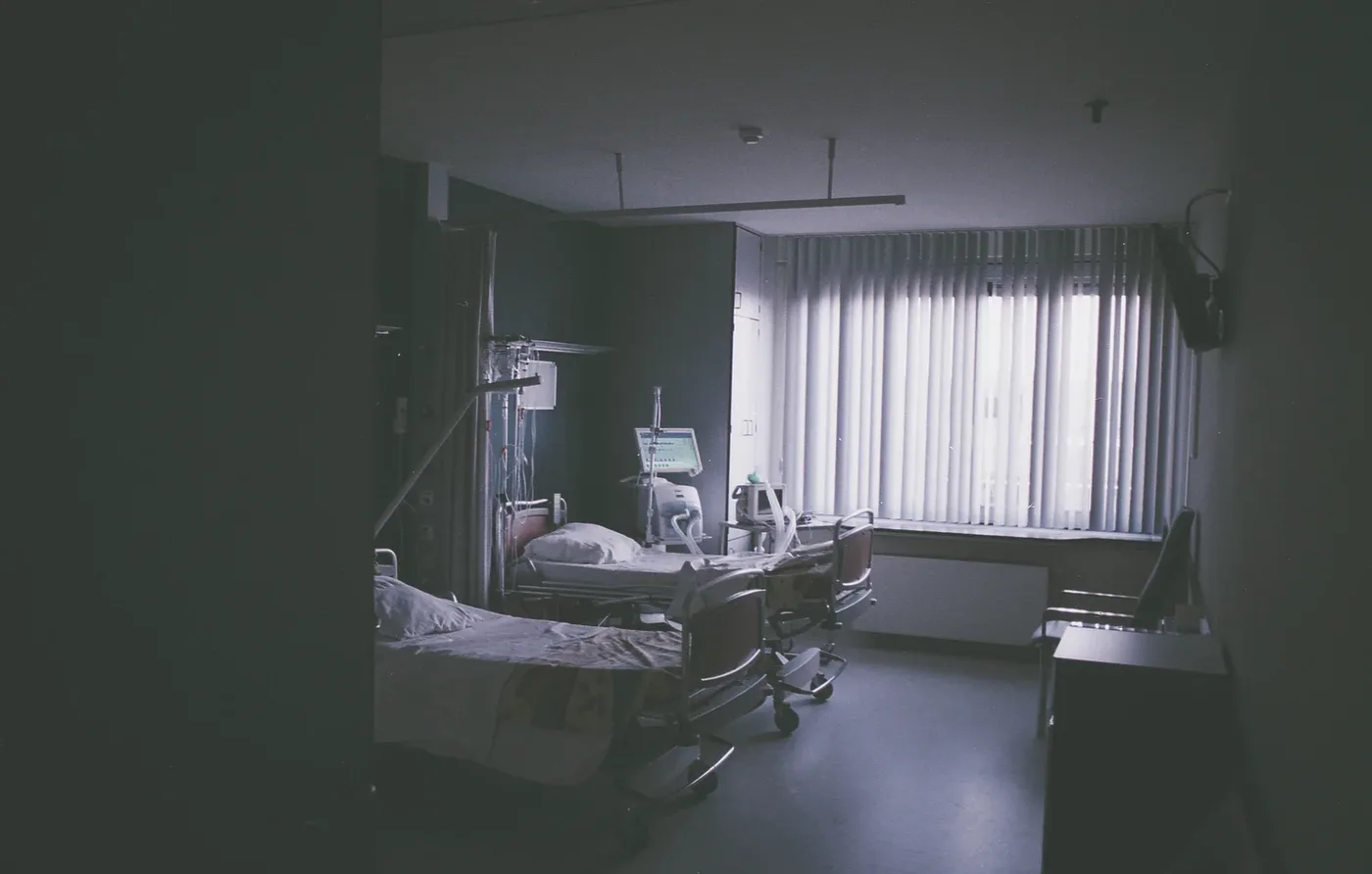
Hospital staff know the rules for sorting waste, but mistakes still happen. The gap is between knowing and doing: a quick decision at the bin, made by someone whose attention is on a patient.
Interviewed experts, did fieldwork at Whipps Cross Hospital, surveyed staff and analysed the waste data. Then I used the EAST framework to design a nudge: clearer, colour-coded bin labels.
My thesis earned a Distinction, and motivated me to work for one of the world's leading environmental consultancies.
“But changing actual human behaviour calls for good design solutions that take basic human instincts, flaws and habits into consideration. That is design to nudge.”
Hospitals use a lot of energy and water and produce huge amounts of waste. Carbon dioxide emissions from the NHS in England are greater than the annual emissions from all aircraft leaving Heathrow Airport. The NHS is also one of the largest employers in the world, so even small changes can have a big impact.
I chose Barts Health NHS Trust because it is the largest trust in England, with six hospitals, 15,000 staff and over 2 million patients a year. It had already made big strides. With its waste contractor Skanska, it had sent no waste to landfill since 2013, and was the first NHS trust to receive the Carbon Trust Waste Management Standard.
“Previously we emptied the waste into the incinerator and all you got out was black ash. But with the autoclave we could see what came out the other end, and there were all sorts of things, like chocolate boxes and daffodils. So yes, the NHS was paying to sterilise bunches of flowers.”
There is a gap between how we want to behave and how we actually act, because we use two systems to make decisions. The automatic system is fast and unconscious, and it runs most of what we do because it saves energy. The reflective system is slow and careful, and only switches on when something is unusual or risky. Nudging works with the automatic system instead of against it.
At the bin. About two seconds. Mid-task, attention on a patient. Runs on habit, placement and whatever is easiest to reach.
In the training room. Unhurried, undistracted, thinking about waste as a subject. Where every awareness campaign lands.
A nudge changes behaviour in a predictable way without forbidding any options. To design one, I used EAST: make it easy, attractive, social and timely.
The more obstacles there are, the less likely people are to do something. Make the right choice the simplest one.
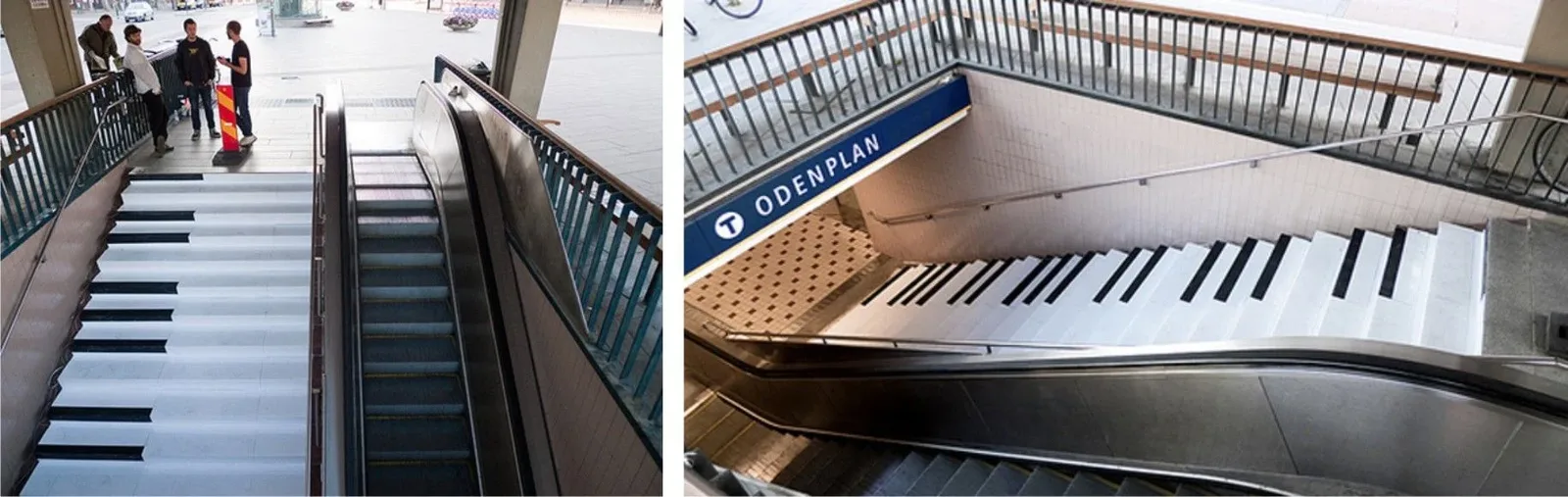
Eye-catching, fun or interesting. The piano stairs in Stockholm got 66% more people to take the stairs instead of the escalator.
People follow what others do. Hotel guests reused towels more when told most guests in their room did, than when told it helped the environment.
Prompt people when it suits them. One proposal offered farmers fertiliser vouchers just after harvest, when they had money to spend.
I surveyed 44 staff from Whipps Cross and across Barts Health. Most cared about recycling, but many had never been properly trained, and they disagreed about what would help.
“More bins and different colours.”
“There are too many bins, reduce them.”
“Finding the right bin. More visible marking.”
The answers contradicted each other on the number of bins, but agreed on one thing: clearer labels.
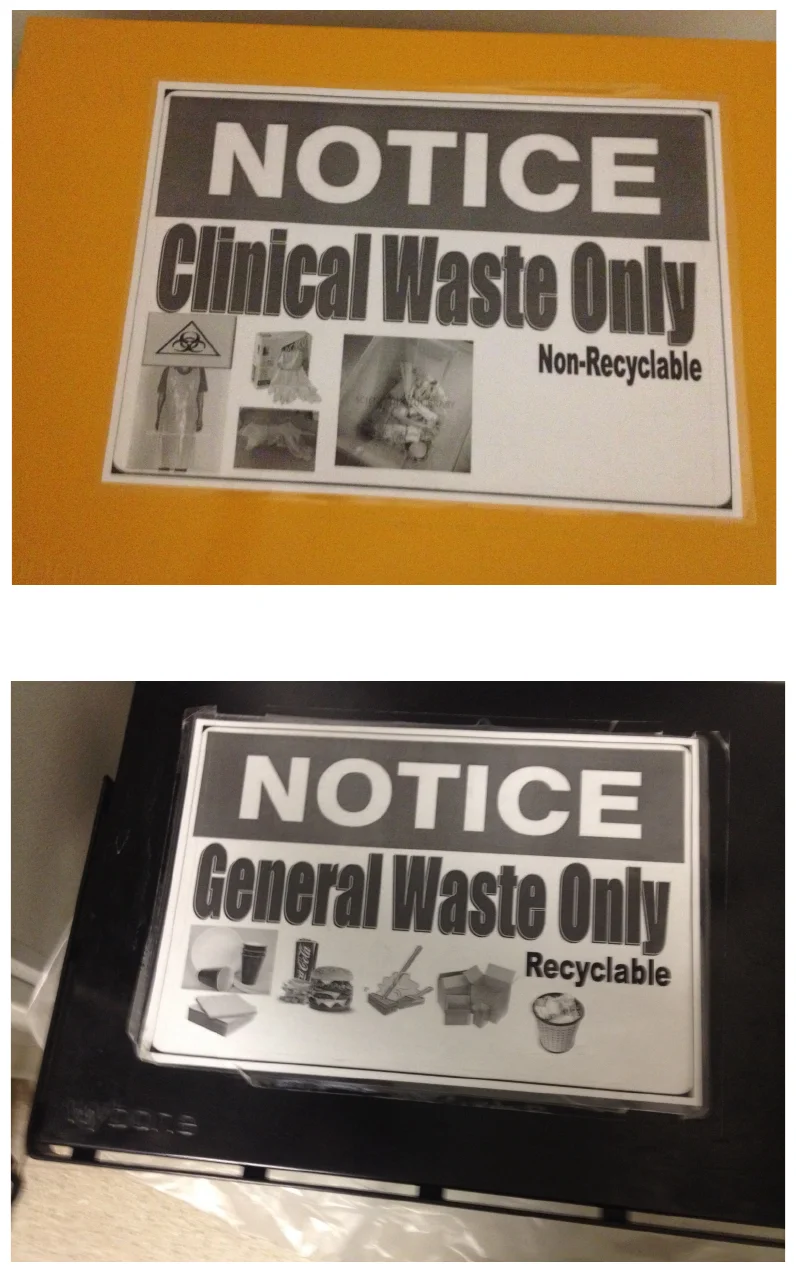
The existing labels for clinical and general waste looked almost the same: black and white, with the word “NOTICE” at the top. Only one word told them apart, so there was nothing to catch someone's eye in a hurry.
I designed new labels for the trust's eight types of waste. I kept the colours staff already knew, used simple icons, and kept text to a minimum. I also proposed pairing clinical and general waste bins, so the right bin is always as close as the wrong one.
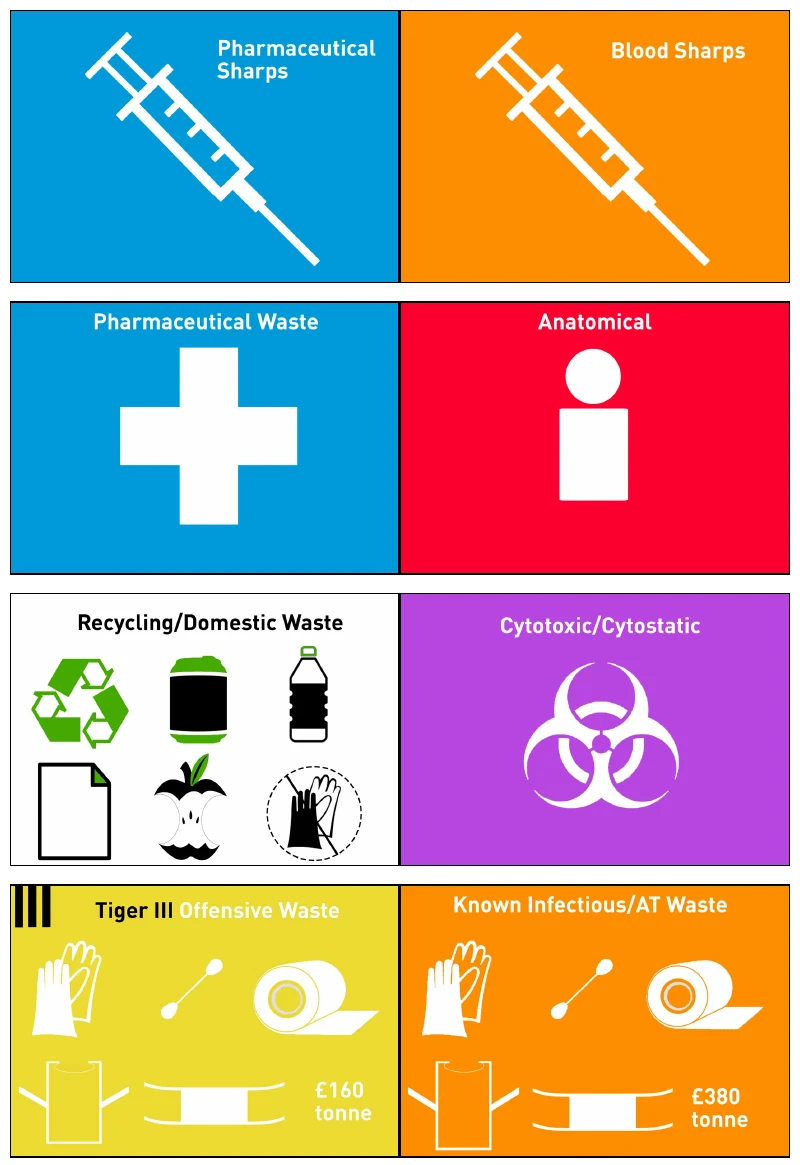
Infectious waste costs £380 a tonne to dispose of, more than double the £160 for offensive waste. Showing it on the label makes the cost of a wrong choice visible.
Some staff didn't know domestic waste is recycled, so the label says it. Gloves are crossed out, because they were the most common thing in the wrong bin.
The labels fit on top of the existing bins, so they cost very little to put in place.
Whipps Cross would be the pilot, and the monthly bin audits already in place would show whether it worked.
Some critics argue that nudging is patronising, and that it interferes with people's choices. But as Thaler and Sunstein point out, there is no such thing as neutral design. Every design choice influences people, so it is better to use that knowledge to help them.
A good nudge should be voluntary, easy to avoid, low cost and transparent, and it should always point towards what is best for the person being nudged. It's a nudge, not a shove.