The problem
Situations nobody had advised on before: two rents because of a travel ban, repairs you couldn't let into the house, housemates who wanted you out. Face-to-face help had closed, and 75% of visits were on mobile.
Case study · Shelter
In March 2020 Shelter's face-to-face hubs closed just as demand for housing advice rose. People needed answers on their phones, and the law behind those answers changed almost daily. I was Senior UX Designer in the cross-functional team that designed Shelter's digital response.
Situations nobody had advised on before: two rents because of a travel ban, repairs you couldn't let into the house, housemates who wanted you out. Face-to-face help had closed, and 75% of visits were on mobile.
Designed how people reached one emergency advice page, kept a fast-growing page usable on a phone, and used search, analytics and feedback to decide what to change next.
1.5 million pageviews, a quarter of all traffic to the site. A rent negotiation page built from user feedback became the most clicked next step.
“Her UX knowledge is top-notch, and she always found the right balance between business goals and technical realities. She juggled multiple high-pressure projects at Shelter Scotland and always kept the quality consistently high.”
The coronavirus outbreak caused a significant increase in demand on Shelter’s services. Our users were impacted by the pandemic with a variety of housing issues. Some were a rise in queries Shelter was familiar with (‘I have lost my job, I won’t be able to afford my rent anymore’). Others were new and unusual scenarios (‘I can’t move into my new property because of lockdown, so I am now liable for two rents’, or ‘I want to follow social distancing, therefore I am unable to get repairs done’, or ‘I am an essential worker and I am facing issues with my housemates, who want to self-isolate’).
Some of the ways our users accessed our services were impacted too. Our face-to-face hubs closed, disrupting many user journeys. During lockdown it was more important than ever that users could access vital information through their digital devices. But how do you deliver effective advice when information is changing daily?
I owned the user experience of the advice journey: how people found the page, how they moved through it on a phone, and what they did next. I worked from site search data, the analytics dashboard and Hotjar feedback, and brought what I found to our daily stand-up.
I worked alongside Marida Maiorino, our Senior Service Designer, who led the research synthesis, and Catherine Dickinson and the content team, who wrote and kept the advice up to date. The decisions below were made together.
Stage 1 · Before lockdown
Tenant“I want to return to the UK.”
Tenant“I'm worried I will be stuck in another country.”
Landlord“I'm scared of catching the virus from my lodger.”
Tenant“I want to return to the UK but I'm worried I can't get back because of flights.”
Landlord“I'm beginning to worry about my rental business. I can see people falling into rent arrears if this goes on much longer.”
Stage 2 · Lockdown
Landlord“I have others in the household who want to leave to save paying me rent. I can't have someone from abroad moving in. That will be another excuse.”
Tenant“My landlord won't negotiate. They want me to quarantine when I get back before I move in.”
Landlord“I'm reluctant to negotiate. I need to keep my business going. This is how I've interpreted the change in law.”
Tenant“I want to return to the UK but there are no flights, and I can't move during lockdown.”
Tenant“I want to go back to Spain to stay with my family, but I can't find a replacement for my room and my landlord won't reply.”
Tenant“My landlord is trying to get rid of my belongings and rent my room to someone else.”
Tenant“My roommates don't want me to come back from Italy during lockdown.”
Landlord“You can't have your deposit back, or skip the last three months of a student contract, just because you had to leave university early.”
Adapted from the travel ban timeline by Marida Maiorino, built from helpline and webchat conversations between 9 March and 14 April 2020. Quotes lightly edited for reading. It gave the whole team the same picture, and helped us predict what people would ask next.
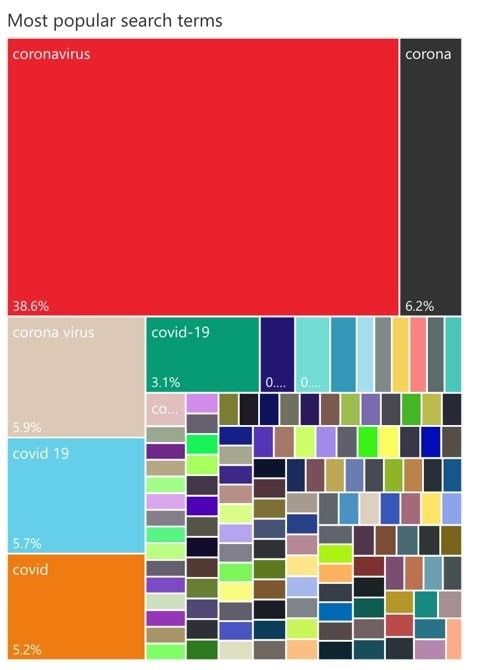
Of course, it was also important that users found their way to the page. Data from the internal search engine showed that searches related to coronavirus dominated the most popular search terms. This rudimentary data further demonstrated users’ need for focused coronavirus housing advice.
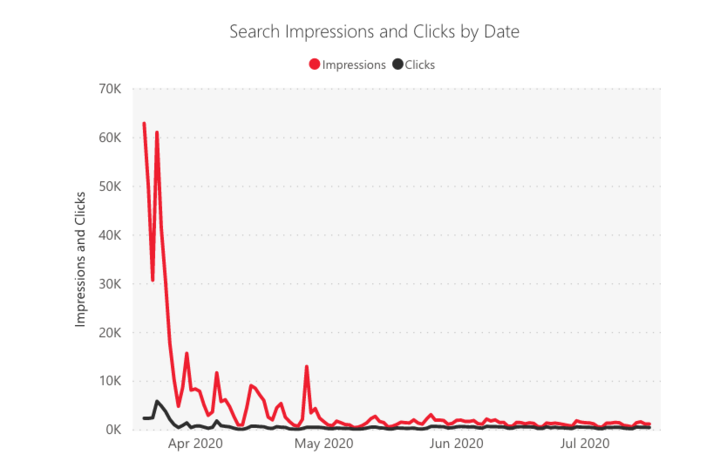
A global banner was implemented as a CTA to the dedicated coronavirus housing advice page. Not only did it dramatically reduce users having to search for advice, it also reassured users that Shelter was responding to provide help and advice during such an uncertain time.
Another issue we looked at was page length. The amount of information provided meant the page was significantly longer than most of our other advice pages. This was especially challenging as 75% of all visits came from mobile.
We discussed the use of an accordion component because of its ability to quickly enable users to see an overview of multiple, related sections of content and hide and show those sections as needed.
In the end, this design change was deemed too experimental within the time constraints. We opted for smaller changes and low-risk solutions backed by data and evidence. The digital analytics team produced a coronavirus data dashboard, which was an invaluable source of key information throughout.
After reviewing user feedback on Hotjar as well as onward page journeys, it became evident that some users were uncertain of next steps, and were seeking more actionable content. We also saw evidence of this in the thematic analysis of webchats. For example, we advised users who were worried about rent payment problems to speak to their landlord about a rent reduction or late rent payment. However, feedback showed that users wanted advice on how to negotiate.
The team created a new page including a template letter that users could edit on-page, and then copy to send to their landlord. The new page, ‘How to negotiate a rent reduction during the coronavirus outbreak’, proved hugely successful and quickly received the most outbound clicks from the main advice page.
With Marida Maiorino (service design), Catherine Dickinson and the Digital Advice team (content), and Shelter's user research, development, analytics and housing advice teams.