The role
Lead the Scottish digital team and website, with many teams asking for our time: events, fundraising, campaigns, housing advice and the helpline.
Case study · Shelter Scotland
As Product Lead, I managed a team of eight and was responsible for Shelter Scotland's website. I planned the team's work across advice, campaigns and fundraising, and made accessibility part of how we worked.
Lead the Scottish digital team and website, with many teams asking for our time: events, fundraising, campaigns, housing advice and the helpline.
Line managed a team of eight, created the digital roadmap, planned the work by quarter, managed the budget, and championed accessibility.
The team had a digital roadmap, so it was clear what we were working on, when, and what our goals were. Housing advice guides were rewritten as steps, which reduced calls to the helpline.
“She’s super dedicated, efficient, and great at keeping projects on track. On top of that, she’s a clear and constructive communicator, making collaboration easy and enjoyable.”
I line managed eight people.
The digital team worked for the whole of Shelter Scotland. Each area had its own deadlines and priorities, and they often needed us at the same time.
I set up a prioritisation framework, so we decided what to take on in the same way each time. It also helped keep the other teams satisfied, because they could see why something was or wasn't on the roadmap. These were the questions we asked:
Before, the team didn't have a roadmap. I created one, so it was clear what we were working on, when, and what our goals were. I planned the work quarter by quarter, managed the budget, and looked after several product streams at the same time.
I shared progress through quarterly reports and show and tells, and the team planned its work in sprints, with stand-ups, retros and a Kanban board.
I kept the Head of Communications and Engagement involved as the roadmap took shape, so it matched Shelter Scotland's goals, and kept in touch with the wider Shelter digital team to avoid doing the same work twice.
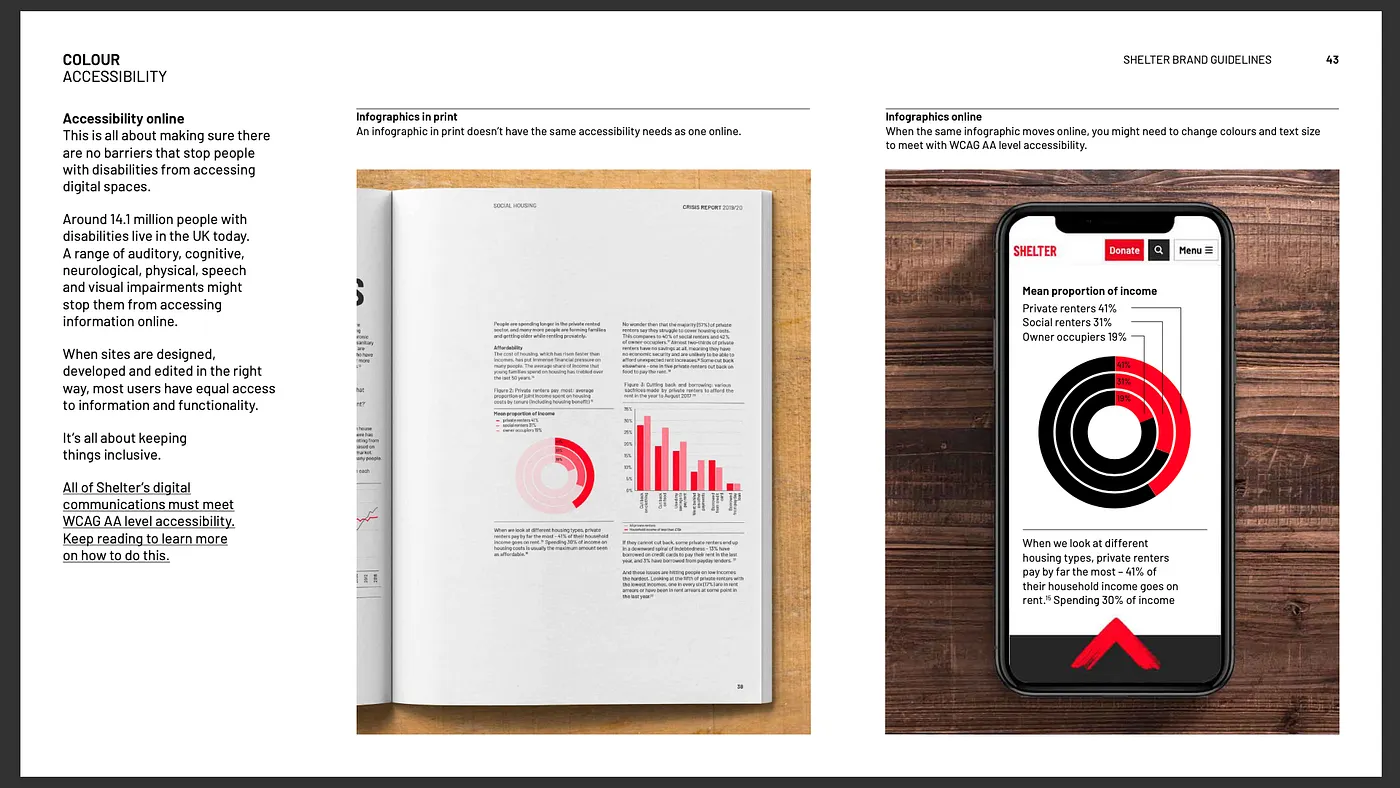
Many people come to Shelter Scotland at a stressful time, and need to understand their housing rights quickly. I championed accessibility across the team, and the Scottish website met WCAG 2.1 AA.
That included the way the housing advice is written. We worked on guidance for writing accessible content, so that the advice can be understood by as many people as possible. We tested the advice with users, and rewrote guides as steps, with clear actions and next steps. This reduced calls to the helpline.
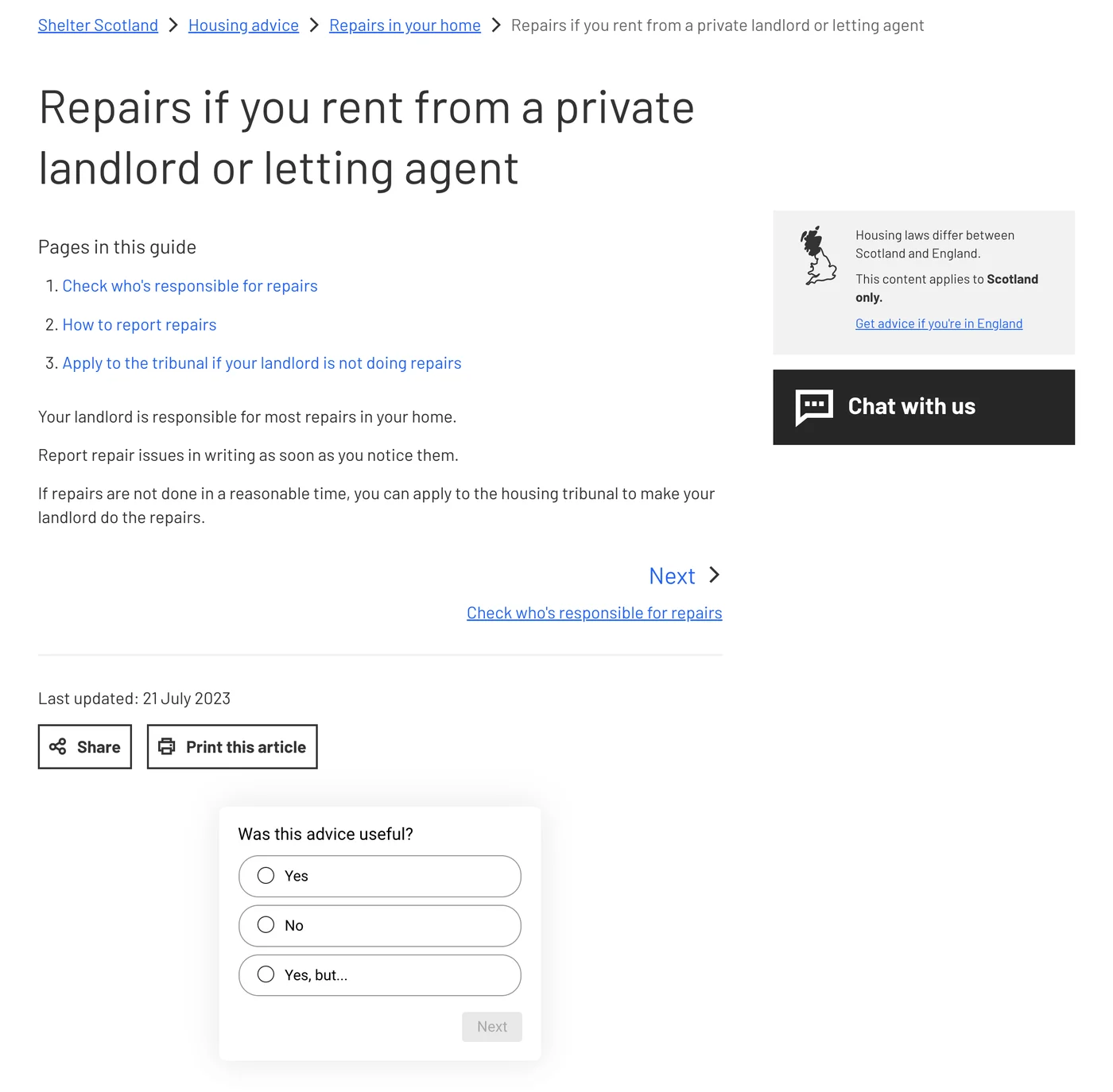

A repairs guide on the Scottish website, on desktop and on a phone. The guide is split into numbered steps, with a short summary and a clear next step.
design.shelter.org.uk/digital-frameworkShelter's accessibility guidesOpen ↗Still published: guidance and best practice, writing accessible content, social media, and the WCAG criteria the website is held to.